Our latest Women in Business report reveals the pace towards parity in mid-market firms isn’t moving fast enough. A young woman starting her career today will be working for more than a quarter of a century before she can expect to work at a mid-market firm with gender parity in top senior roles. Our research explores how gender balanced teams can bring better business performance – and with small and mid-market firms making up the largest part of the global economy [i], now is the time to keep up the pressure.

In the next edition of Grant Thornton’s series on trending international insights, we examine how a shifting economic landscape can offer the mid-market an opportunity to grow while their larger counterparts opt to ‘wait and see.’
In the next edition of Grant Thornton’s series on trending international insights, we examine how disruption can be an opportunity for growth and differentiate mid-market firms from competitors.
On the one hand, the results from our once-every-two-years look at the world’s leading emerging markets were encouraging. Business leaders across the world are looking at international expansion opportunities.
Grant Thornton understands that multinational tax challenges are among the most complex and expensive issues facing companies with international operations. And expatriate tax issues are a key consideration for companies working across borders.
Your questions answered by Nigel Davies, your questions answered by Nigel Davis
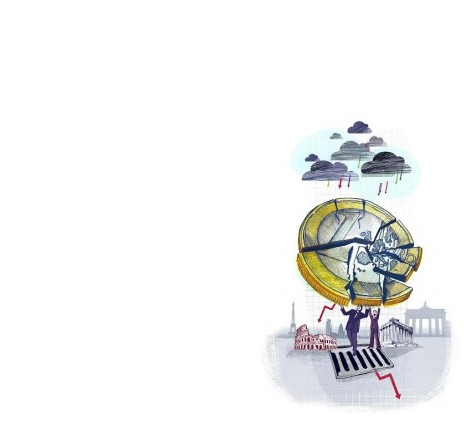
Monday night’s news that international lenders had reached an agreement on how to remedy Greece’s bailout programme, thereby releasing a delayed €34.4bn aid payment, was an important step for the future of the eurozone. But as the crisis drags on and growth rates continue to disappoint, the cost to businesses keeps on rising.
On Thursday of last week, I chaired a panel of leading figures from the PE industry – including Paul Canning (HIG Capital Europe), David Whileman (3i), Franceso di Valmarana (Pantheon) and my colleague Mo Merali (Grant Thornton UK) – to launch our 2012 Global Private Equity report: ‘The search for growth’.
The Philippine economy is growing fast. GDP expanded by 6.8% in 2012 and, whilst remittances climbed to a record high of US$23.8 billion in 2012, their share of GDP actually dropped to 8.5%, down from 9% in 2011.
One of the most interesting aspects of our recent Global Dynamism Index (GDI) was the strong performance of mature economies. It was a result Ed Nusbaum described as counterintuitive in that the word dynamism tends to be attributed to faster growing emerging markets such as the BRIC economies.
Economic slowdown hampering business growth efforts. Globally, business optimism dropped for the year ahead from net 23% in Q2 to net 8%, well below the 2010-12 average.
The London 2012 Olympic and Paralympic Games were widely regarded as a huge success. Spectators, officials and competitors alike praised not just the efficiency of organisation, but the spirit in which the games were held.
Recovery from the financial crisis remains uncertain across both mature and emerging markets. During the past 12 months we have seen volatile commodity prices, disruptions in supply chains, political uprisings and natural disasters.
The past 12 months have seen women take the lead in some of the toughest economic and political environments, and they also head governments in countries such as Argentina, Australia, Brazil and Thailand.
Through our International Business Report we’ve been keeping track of global figures on the appetites for both domestic and cross-border transactions since 2008.
The global economy is going through a very difficult phase. Growth in key emerging markets such as China, Brazil and India is slowing. In the United States, the economy seems to be treading water as everyone waits for the presidential elections in November, despite the looming ‘fiscal cliff’.
Increasing attention on companies’ cash generation and liquidity position has led financial statement users, regulators and other commentators to focus increasingly on the Statement of Cash Flows. However, this additional focus and scrutiny has also highlighted some common errors and inconsistencies in its preparation. This Guide aims to remind management of IAS 7's basic requirements; highlight interpretative and practical application issues; and provide insights to address these issues.
In 1951, in the aftermath of the Second World War, Belgium, France, Germany, Italy, Luxembourg and the Netherlands came together to found the European Union.