Our latest Women in Business report reveals the pace towards parity in mid-market firms isn’t moving fast enough. A young woman starting her career today will be working for more than a quarter of a century before she can expect to work at a mid-market firm with gender parity in top senior roles. Our research explores how gender balanced teams can bring better business performance – and with small and mid-market firms making up the largest part of the global economy [i], now is the time to keep up the pressure.

In the next edition of Grant Thornton’s series on trending international insights, we examine how a shifting economic landscape can offer the mid-market an opportunity to grow while their larger counterparts opt to ‘wait and see.’
In the next edition of Grant Thornton’s series on trending international insights, we examine how disruption can be an opportunity for growth and differentiate mid-market firms from competitors.
Businesses in the hospitality & tourism industry are the most bullish globally on the outlook for both revenues and profits. That’s according to the Q2 International Business Report (IBR[1]) results, providing further evidence of strong performance in the industry.
Reviewing the Q2 International Business Report (IBR[1]) results, I was pleased to see some good news for construction & real estate companies: Profitability expectations around the world are up. However, my optimism is tempered somewhat by recent news from China and it will be interesting to see how businesses react in Q3.
The issue of transfer pricing has hit the headlines in the UK and the US over recent weeks due to the relatively low level of corporation tax multinationals such as Amazon, Apple, Google and Starbucks.
The brightening outlook for Spain. Rising exports amongst reasons to be optimistic
Dynamic organisations need to apply both reason and instinct when making business decisions is the cornerstone of our 2012 advertising campaign.
At a time when China and the EU are arguing over solar panel subsidies and shale gas has revolutionised the US – and perhaps soon the global – energy market, I was encouraged to see the general optimism amongst cleantech businesses in the Q2 update from our International Business Report (IBR).
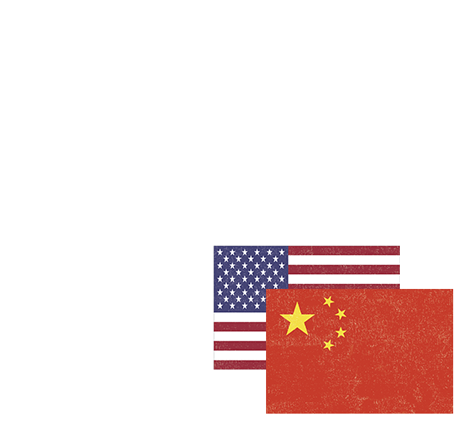
This time last week I was interviewed by Bloomberg and CNBC to discuss a divergence in business optimism between China and the US revealed by our Q2 International Business Report (IBR). The results were surprising: Chinese business optimism is at an all-time low whilst their US peers are more optimistic than at any time since 2005.
Grant Thornton understands that multinational tax challenges are among the most complex and expensive issues facing companies with international operations. And expatriate tax issues are a key consideration for companies working across borders.
Last week, the International Labour Organisation (ILO) released their annual World of Work report. It contains some stark warnings, particularly for mature economies where it does not expect employment levels to return to pre-crisis levels before 2017. Getting people back into work, the report says, will be a “major global challenge” for years to come and the threat of “social unrest” a major risk.
Advanced Pricing Agreements (APAs) are helping to alleviate the risk of double taxation. In turn, Mutual Agreement Procedures (MAPs) may offer a smoother path to conflict resolution. But neither is a panacea.
Writing our recently released Future of Europe report, the thing that stood out to me most was the divergence of business opinion on how to handle the eurozone crisis. And not just between the 17 euro ‘ins’ and the 10 euro ‘outs’ – which you might expect – but a split right at the heart of Europe.
I was interviewed on Wednesday morning by Bloomberg and BBC World, discussing our latest IBR results which reveal that the vast majority of business leaders would welcome more guidance on tax planning, even if this reduced their opportunities to cut cross-border tax liabilities.
Having been Managing Partner of Grant Thornton Ireland for 9 years, I was naturally drawn to the mixed views of Irish businesses in our 2013 Future of Europe report which we released this week. The report revealed much support for what the euro has achieved, but very little appetite for further integration.